What Actually Sells at a Swap Meet (and What Sits on Your Table All Day)
Not everything in your closet is swap meet material. Here's what moves fast, what collects dust, and how to stock a table people want to browse.
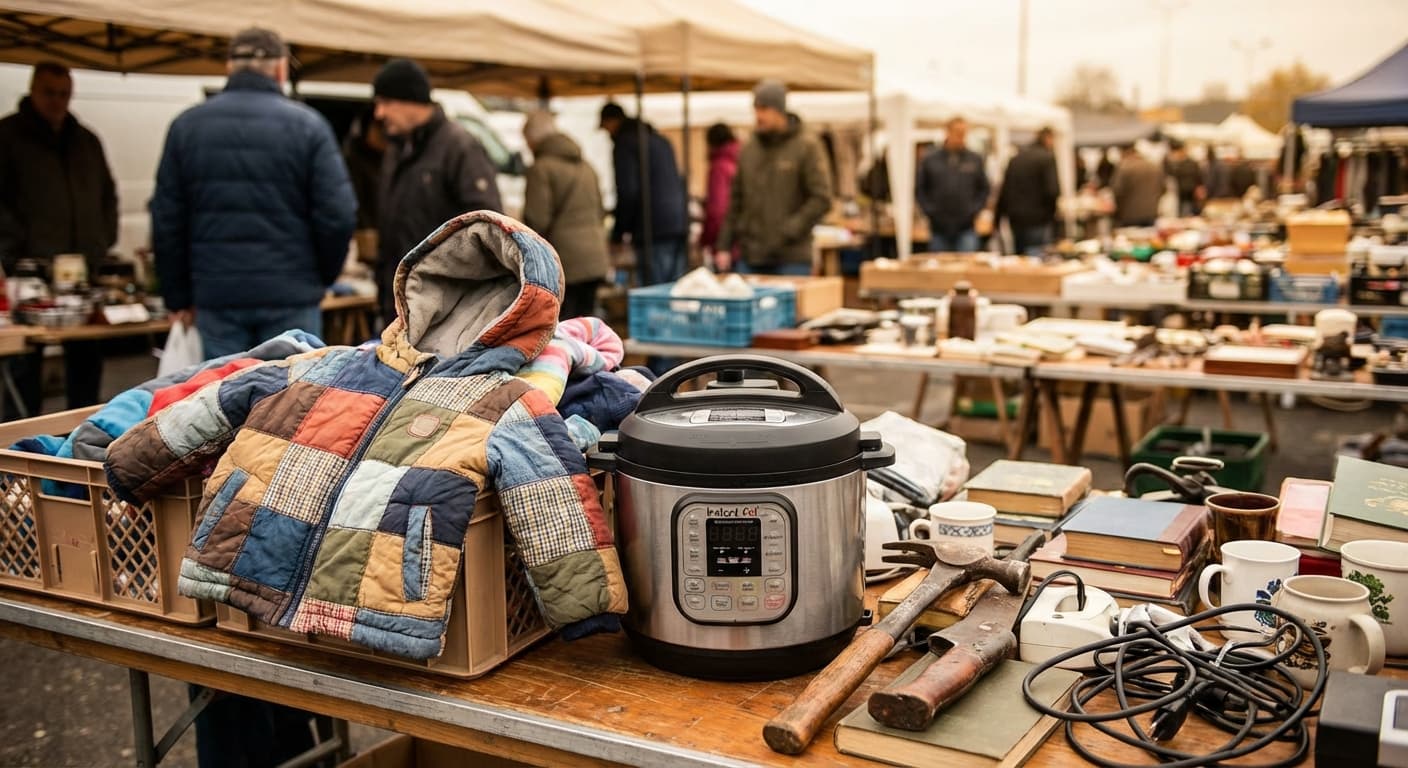
You cleaned out three closets, two drawers, and the garage. You've got four bins ready to go. Half will sell before 10am. The other half rides home with you. The difference is rarely about price. It's about what people show up looking for.
The Fast Movers
Some categories sell themselves.
Kids' clothes and gear in good condition. Parents are the most motivated shoppers at any swap meet. They know their kid will outgrow that jacket in four months, so retail prices make no sense. Clean, stain-free kids' clothes in sizes 2T through 8 disappear fast. (If you have enough parents in your group, a dedicated kids' swap meet moves even more.) Car seats are tough because of safety concerns, but strollers, high chairs, and outdoor toys move.
Kitchen appliances that work. Instant Pots, air fryers, stand mixers, food processors. People want these but hate paying $80-150 new for something they'll use twice a month. If you have one gathering dust in a cabinet, bring it. And bring the cord. A food processor without the blade attachment is just a bowl.
Tools. Hand tools, power tools, garden tools. A decent cordless drill or a full socket set draws attention within minutes of the event opening. Even basic stuff like hammers, pliers, and measuring tapes will go for a couple bucks each.
Books, but only certain ones. Cookbooks, recent bestsellers, kids' picture books, and anything with a recognizable series name. Romance and mystery novels move well in bulk deals. Textbooks from five years ago? Leave them home.
Board games with all the pieces. Count them the night before. A board game missing three tiles is landfill material. A complete one is a $5-10 sale all day long. Popular titles like Catan, Ticket to Ride, or Codenames go even faster.
Brand-name clothing in current styles. Not your 2012 graphic tees. Brands people recognize in styles that don't scream "previous decade." Patagonia, Nike, Levi's, North Face. Clean, no stains, no stretched-out collars.
The Slow Movers
These can sell, but they need the right buyer and some patience.
Furniture. The issue isn't demand, it's logistics. Nobody planned to carry a bookshelf home from a swap meet. If you're selling furniture, post photos in your event listing ahead of time so interested buyers can bring a truck. Small pieces like stools and end tables do okay without advance notice. Couches and dining tables need a special situation.
Electronics. People get cautious. They can't test a Bluetooth speaker or verify a laptop battery at your table. Price electronics low enough that the risk feels acceptable. Charging cables, phone cases, and simple accessories sell easier than the devices themselves.
Vinyl records and collectibles. These sell to a specific crowd. If that crowd shows up, you're golden. If they don't, you're explaining to strangers why a first pressing matters. Niche items are a gamble at a general swap meet. Specialty swap events are a better venue for these.
The Dead Weight
Some things seem like they should sell but almost never do. Save yourself the bin space.
Encyclopedias and old textbooks. Nobody is buying a 2018 biology textbook or a set of World Book encyclopedias from 2003. Knowledge with an expiration date expires.
VHS tapes and most DVDs. With rare exceptions (Disney clamshell cases, specific cult films), physical media sits untouched. People stream now. A box of 40 DVDs is heavy to carry and worth about $3 total.
Clothing with stains, holes, or heavy wear. You know that shirt is still "good enough." It isn't. If you have to explain away a flaw, the item isn't ready for your table. But a lot of flaws are five-minute fixes.
Novelty and souvenir items. Shot glasses from Cancun. Branded corporate swag. Mugs with someone else's name on them. Free table material at best.
Opened beauty products and candles. Nobody trusts a half-used bottle of lotion from a stranger. Unopened, sealed items can work. Partial products won't.
Whatever doesn't make the cut, be intentional about where it goes next.
Building a Table People Browse
The items you bring matter, but so does how your table looks from ten feet away. (Pack the right gear and the display takes care of itself.) People decide to approach or keep walking in about two seconds.
A table stacked with random stuff in garbage bags reads as "junk sale." The same items laid out neatly on a clean tablecloth with visible prices reads as "this person has good stuff."
Small moves that help:
- Bring less, display better. Twenty well-chosen items outsell fifty random ones. A cluttered table makes people's eyes glaze over. They walk past. Edit your inventory before the event, not during it.
- Group by type. Clothes on one side, kitchen stuff on another, books together. Let people find what they came for without digging through a pile.
- Create height. Use a small box or crate to raise items off the flat table surface. Hang clothes on a rack or a clothesline between two chairs. Books displayed cover-out sell faster than spines-out.
- Price everything. Masking tape and a Sharpie. No visible price means most people won't ask. They just move on. (For help figuring out what to charge, check our pricing guide.)
Read the Room by Mid-Morning
By 10am, you'll know what's working. Items getting picked up and examined are priced right. Stuff nobody touches needs a price cut or a trip to the free table.
Don't wait until the last thirty minutes to adjust. Drop the price on anything that hasn't drawn interest, or bundle it with something that's moving. "Take the blender and I'll throw in the cutting board set" works better than watching both items sit there until noon.
The best swap meet sellers bring fewer items than you'd expect. (And the best buyers show up with a plan too.) They pick the stuff people want, price it fairly, and make it easy to see. And if selling isn't your style, the same fast movers make excellent trade bait. Everything else stays in the closet for next time.