How to Spot the Good Stuff at a Swap Meet
Most swap meet shoppers browse randomly and leave with whatever catches their eye. A little strategy goes a long way toward finding the items worth bringing home.
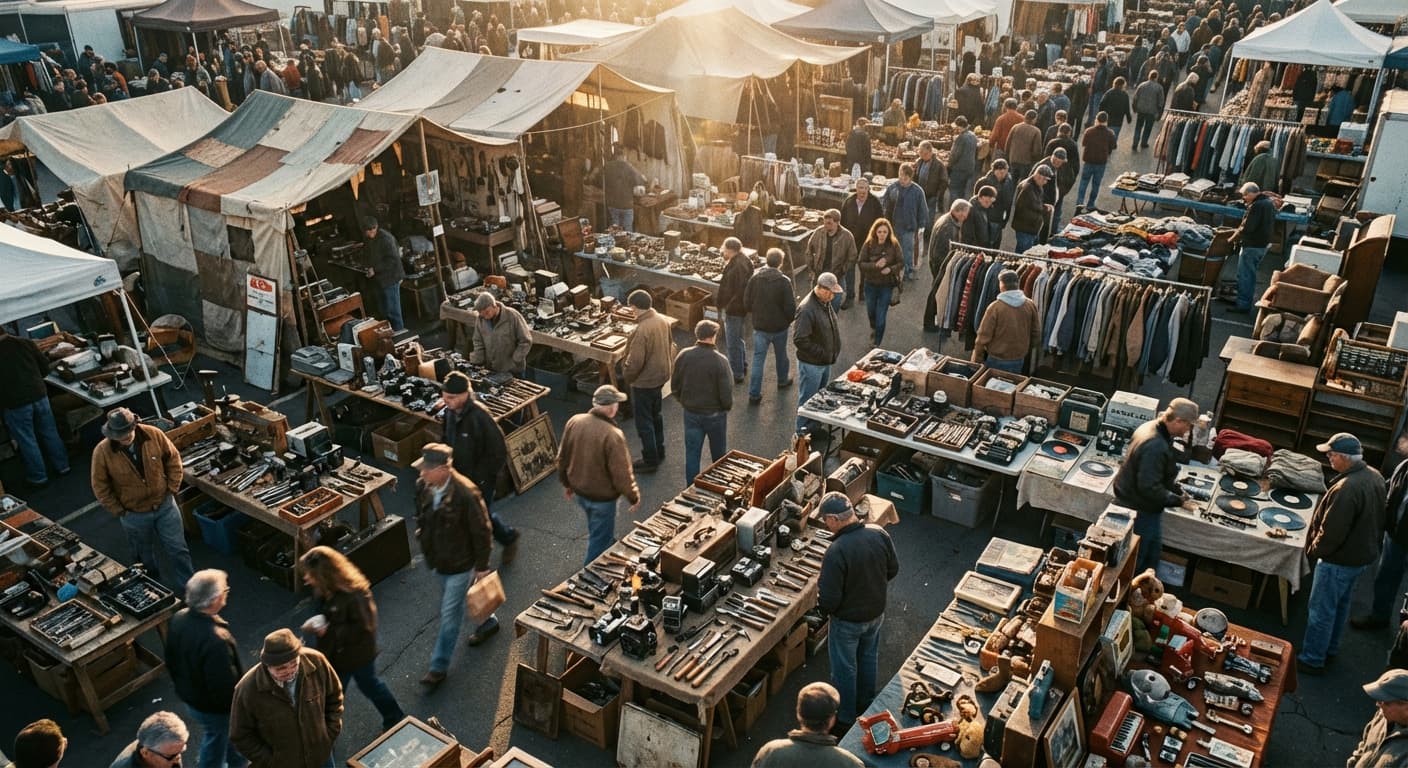
Most people show up to a swap meet, wander the tables, and grab whatever looks interesting. That works fine. You'll find a few decent things. But the shoppers who leave with the best stuff do it differently. They show up with a loose plan, know what to look for, and skip the rest.
Show Up Early or Show Up Late
The two best times to shop are the first thirty minutes and the last hour.
Early birds get first pick. The pristine board games, the name-brand jacket, the working power tools. If there's a specific category you're hunting, being there when tables are still being set up is worth the early alarm.
Late shoppers get the deals. Sellers don't want to pack things up. Prices drop. Bundles appear. "Fill a bag for $5" signs come out. If you're flexible about what you take home and just want volume, the last hour is your window.
The middle of the event is the worst time to arrive if you care about either selection or price. The good stuff is picked over and the fire sales haven't started.
Know What You're Looking For (Roughly)
Walking every table with no filter is exhausting and slow. Before you go, decide on 2-3 categories you want. Kids' clothes in a specific size range. Kitchen gear. Tools. Books by certain authors.
This doesn't mean you ignore everything else. It means you scan each table for your categories first, then browse what catches your eye second. Focused shoppers cover more ground and find better items than wanderers.
A mental price ceiling helps too. Know what you'd pay for the categories you're hunting. Kids' clothes should run $2-5 per piece at a swap meet. Small kitchen appliances $10-25. Tools $5-15. If a seller is pricing at retail, move on. There's another table.
The Quick Condition Check
You have about 30 seconds to evaluate an item before you're holding up the line or losing your nerve. Here's what to check for each category:
Clothes: Turn them inside out. Check the seams, the armpits (stains hide there), and the collar. Stretch the elastic. Smell them. Yes, smell them. Musty clothes are a dry cleaning bill you didn't budget for.
Electronics: Ask if it works. Ask when they last used it. Look for dents, cracks, and missing buttons. If the seller can't plug it in on the spot, assume it doesn't work and price accordingly. A "probably works" speaker is worth $3, not $15.
Books: Open to the middle and check for water damage, foxing (those brown spots on the pages), and writing in the margins. Check the spine. A cracked spine on a hardcover means it's been read hard.
Furniture: Sit on chairs. Open drawers. Check for wobble, water rings, and that musty basement smell that never comes out. Solid wood is worth the effort. Particleboard with peeling laminate is not.
Board games: Open the box. Count the pieces if you can. Missing components are the number one reason games end up at swap meets in the first place.
Talk to the Sellers
The best finds come from conversations, not from scanning tables.
"Do you have any more of these?" is a legitimate question. Sellers often keep overflow in bins under the table or in their car. If you're looking for something specific and a seller has adjacent items, ask. They might pull out exactly what you want.
"What's the story on this?" works for unusual items. A seller who knows the history of a vintage piece will tell you things that affect its value. A seller who says "I don't know, it was my grandmother's" is telling you something useful too.
"Would you do $X for these three?" is always worth trying. Bundling is the easiest way to get a better price, and most sellers prefer moving multiple items at once. Don't lowball. Offer something fair and see what happens. If you want to go deeper on negotiation, there's a whole approach to bartering worth knowing.
What to Bring as a Buyer
Cash in small bills. Many sellers don't take digital payment. Bring $40-60 in ones, fives, and tens. You'll spend less when you can see the bills leaving your hand, too.
A tote bag or backpack. You need somewhere to stash your finds while you keep browsing. Carrying three loose items while trying to examine a fourth is awkward.
Your phone. For price-checking anything you're unsure about. A quick search tells you whether the swap meet price is a deal or a markup. Don't do this in front of the seller. Step away, check, come back.
A list. Not a rigid shopping list, but a note on your phone of things you've been meaning to pick up. "Need a 10-inch cast iron skillet" or "Looking for size 4T winter coat." You'll forget what you need the moment you see something shiny.
The Stuff Nobody Else Is Looking At
The tables with the longest lines have the most obvious good stuff. But some of the best finds are in categories most shoppers skip.
Craft supplies. Fabric, yarn, beads, stamps, paint. Crafters accumulate supplies for projects they never start. At a swap meet, you can stock up for a fraction of what a hobby store charges.
Sporting goods. Tennis rackets, golf clubs, camping gear, fishing tackle. Sports equipment is expensive new and barely depreciates if maintained. A $200 tent used twice is a $30 tent at a swap meet.
Garden tools and pots. Ceramic pots alone are worth the trip. People give away pots that cost $20-40 at a nursery. Hand tools, hoses, and planters are consistently underpriced because they're heavy and sellers want them gone.
The shoppers who find the best deals aren't luckier. They're more prepared, more focused, and more willing to dig past the front row of items on a crowded table.