How to Price Your Stuff for a Swap Meet
Flat category pricing, display tricks, and a simple negotiation strategy so you spend less time agonizing over sticker prices and more time selling.
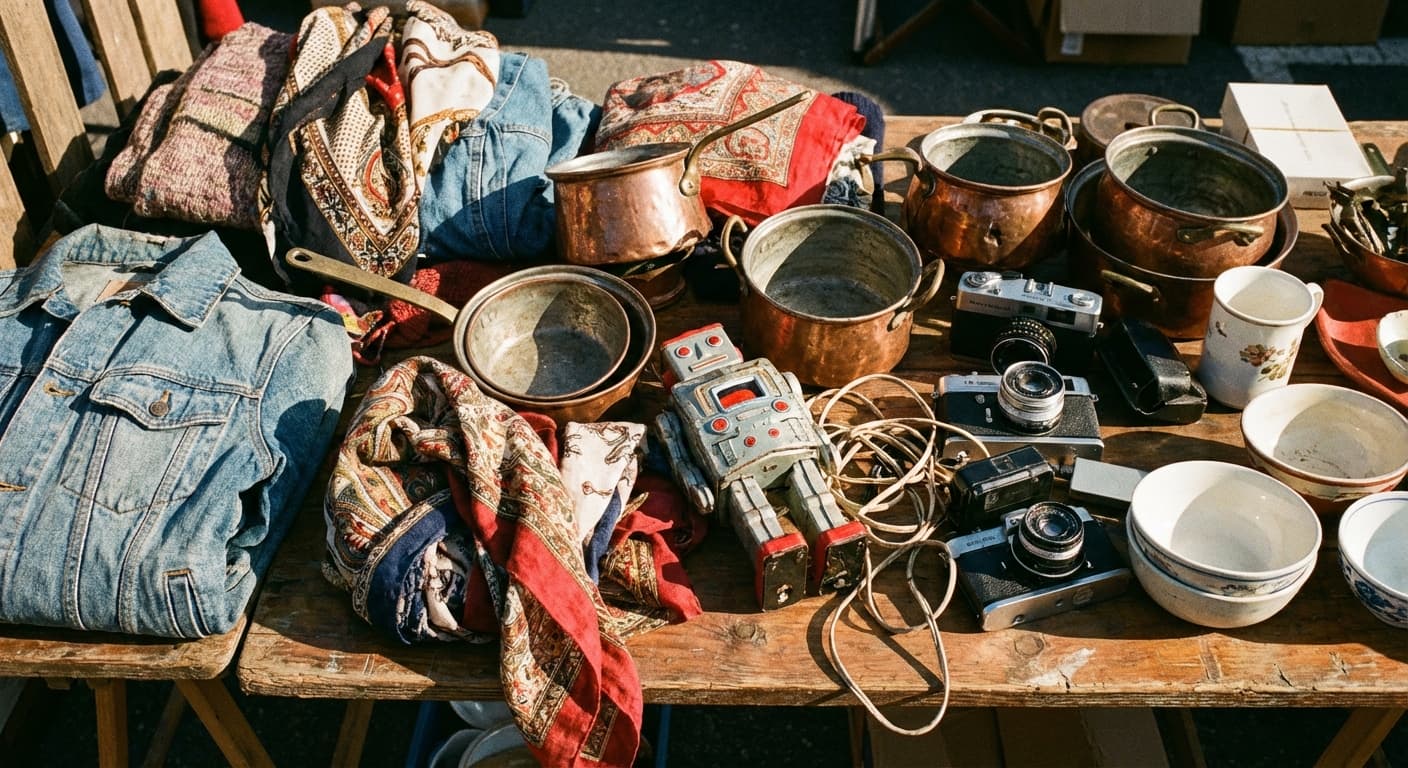
Pricing is the part of swap meets where people freeze up. They either slap $50 on a blender they bought for $80 three years ago, or they label everything at a dollar and wonder why they bothered showing up. Both miss the point.
Swap meet pricing isn't about recovering what you paid. It's about moving items to people who want them at a price that feels fair to both of you. (If you haven't run an event yet, start with how to organize your first swap meet. Not sure what's worth pricing? Check what actually sells first.)
The 20% Rule (and When to Ignore It)
A decent starting point: price most items at about 15-20% of what they cost new. A $100 jacket becomes $15-20. A $40 board game becomes $6-8. A $200 kitchen appliance becomes $30-40.
This works for most everyday items in good condition. But ignore it when:
- The item is trendy or in demand. A popular brand in the right size can go higher. A vintage Pyrex dish or a sought-after LEGO set doesn't follow depreciation rules.
- It's damaged or worn. Stains, missing parts, scratches. Drop to 10% or less. A $60 shirt with a small stain is a $3 shirt at a swap meet.
- You just want it gone. Some stuff is taking up space and you'd pay someone to remove it. Price it at $1 or put it on the free table. No shame in that.
Price by Category, Not by Item
Going through every single thing you own and researching comparable prices online will eat your entire weekend. Don't do it.
Instead, batch your items into categories and set a flat price for each:
- Kids' clothes: $2-5 per piece, or bundle by size ("bag of 6-12 month clothes, $10")
- Adult clothes: $3-8 for everyday items, $10-15 for nicer brands or jackets
- Books: $1-2 each, or 5 for $5
- Kitchen items: $2-5 for small stuff (utensils, mugs), $10-25 for appliances
- Toys and games: $2-5 for small toys, $5-15 for board games and bigger items
- Electronics: Price these individually. Check what they sell for used on eBay or Facebook Marketplace, then go 20-30% lower. People at swap meets expect a deal.
- Furniture: Also price individually. Keep in mind the buyer has to carry it home.
Flat category pricing saves you hours and makes your table easy to browse. A sign that says "All kids' clothes $3" moves more product than 40 individual price stickers.
How to Actually Label Things
Masking tape and a Sharpie. That's it. (For the full gear list beyond labeling supplies, see our packing checklist.) Write the price in large, readable numbers. Stick the tape where it's visible but won't damage the item.
A few display tricks that make a real difference:
- Group similar items together. All the books in one spot, all the kitchen stuff together. People scan tables fast. If they see one thing they like, they'll look at what's next to it.
- Stand things up. Clothes draped flat on a table are invisible. Hang them on a rack or a clothesline strung between two chairs. Books displayed with covers facing out sell faster than spines.
- Put your best stuff at the front. Your nicest or most interesting items should be at eye level, facing the walkway. Draw people in with the good stuff, and they'll dig through the rest.
- Keep a "make an offer" section. Items you can't figure out how to price? Group them together with a sign. People love negotiating when they're invited to.
Negotiation Without the Awkwardness
Someone's going to ask "would you take less?" for almost everything. Decide in advance how you want to handle it.
The simplest approach: say yes to anything within a dollar or two of your asking price. If something is marked $8 and someone offers $5, you can meet at $6 or just say sure. You're here to clear stuff out, not to win a negotiation. (And if someone wants to trade instead of pay cash, that's worth considering too. See our guide to bartering.)
Bundling is your best tool. "I can't go lower on that one, but grab two and I'll do both for $12 instead of $16." The buyer feels like they got a deal, and you moved two items instead of one.
One thing to avoid: don't price things high expecting to be talked down. It backfires. People see a $25 tag on a used coffee maker, assume everything at your table is overpriced, and walk away without saying a word. Start at a fair price and be willing to flex a little.
The Last-Hour Fire Sale
An hour before the event ends, cut everything in half. Or do a "fill a bag for $5" deal. The goal shifts from making money to not bringing things back home.
This is when the free table earns its keep. Anything you don't want to pack up goes there. Somebody will take it. And if they don't, have a plan: a donation drop-off, a thrift store run, or the curb with a "free" sign. (Though you might want to rethink the thrift store option.)
The items you brought home are the items you priced wrong. Keep that in mind for next time.