How to Organize a Kids' Swap Meet That Parents Love
Kids outgrow everything fast. A swap focused on children's items draws motivated parents and moves more stuff than a general event.
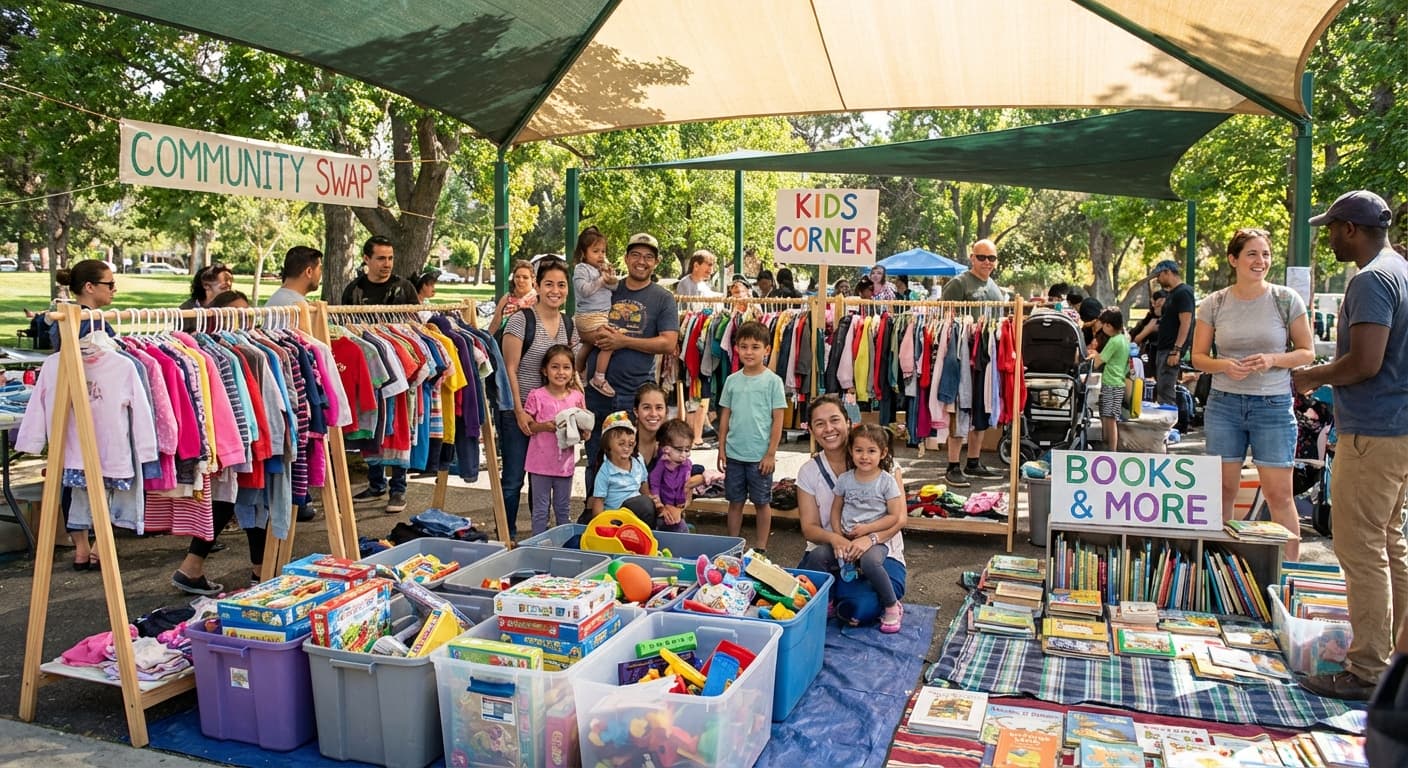
Kids cycle through clothes, toys, books, and gear at a pace that makes adult shopping look glacial. A six-month-old's wardrobe has a shelf life measured in weeks. That $40 snow suit? Worn three times before the kid grew two inches. Parents know this. It's why they're the most motivated shoppers at any swap meet.
A kids-only swap takes that energy and concentrates it. Instead of browsing past power tools and vinyl records to find the 3T winter clothes, every table has what parents came for.
What Counts as "Kids' Stuff"
Define the scope before you invite anyone. "Kids' items" means different things to different families.
A solid scope for a first event:
- Clothes: Newborn through size 12 or 14. Beyond that, teenagers have opinions about their wardrobe and secondhand becomes a harder sell.
- Toys and games: Working, with all pieces. No broken or battery-corroded items.
- Books: Board books through chapter books. Picture books are the fastest movers.
- Gear: Strollers, high chairs, pack-and-plays, baby monitors, carriers. Not car seats. Car seats have expiration dates and safety concerns that make secondhand sales complicated. Leave them out and save yourself the liability conversation.
- Sports equipment: Cleats, shin guards, bikes, helmets, baseball gloves. Kids outgrow these before they wear them out.
What to exclude: cribs (safety regulations change), anything recalled (check cpsc.gov if you're unsure), and homemade food or skincare products.
Organize by Age Range, Not by Seller
The standard swap meet format, where each seller runs their own table, works fine for general events. For kids' stuff, try a different layout: organize tables by age range.
Set up sections:
- 0-12 months
- 1-2 years
- 3-5 years
- 6-8 years
- 9-12 years
Parents shopping for a 4-year-old go straight to the 3-5 section. They skip the infant onesies and tween hoodies entirely. This layout alone makes your event feel more organized than most.
Each seller still owns and prices their items. They just place them in the right age section. Use colored stickers or masking tape with initials so sellers can track what's theirs.
Toys, books, and gear can have their own sections regardless of age, since these cross age boundaries.
Pricing Kids' Stuff
Parents at a kids' swap have specific expectations. They know this stuff has a short useful life, and they're not paying close to retail.
Ranges that move items quickly:
- Clothes: $1-3 per piece for everyday items. $5-8 for jackets, snow suits, or brand names. Bundle deals work especially well: "5 items for $10" or "fill a bag for $15."
- Toys: $1-5 for small toys. $5-15 for bigger items or popular brands (LEGO, Magna-Tiles, Play-Doh sets).
- Books: $0.50-2 each, or 5 for $3. Picture books in good shape are the sweet spot.
- Gear: Price individually based on condition. A clean stroller might go for $20-40. A high chair for $10-20.
The goal is turnover, not profit. Every item that leaves is one less thing taking up space at home. (For more on pricing strategy, see the full pricing guide.)
Making It Kid-Friendly (Without Making It a Kids' Event)
The swap meet is for parents. Kids are along for the ride. Important distinction. You don't need a bouncy castle or a face painter. You need kids occupied enough that parents can browse.
A few low-effort setups that work:
- A play area. A tarp or blanket on the ground with a box of communal toys. Ask one parent to volunteer to watch it in 30-minute shifts so nobody misses the whole event.
- A coloring station. A table with paper and crayons. Cost: essentially zero. Keeps kids aged 3-8 busy for a surprising amount of time.
- A kids' book corner. Pull some of the book inventory and create a reading nook. Beanbags or pillows on the ground. Kids read, parents shop.
Skip organized activities. They require coordination, create noise, and pull parents away from browsing. The best kids' area is one that runs itself.
The Logistics That Matter
Timing. Saturday morning, 9am to noon. Not earlier. Parents with young kids are not dragging themselves out at 7am. Not later. Nap schedules are real and they rule everything. Three hours is the right window.
Parking. Families arrive with carloads of stuff plus kids in tow. They need to unload close to the venue. A church lot or community center with adjacent parking beats a neighborhood street where everyone carries bins three blocks.
Stroller access. Wide aisles between tables. If a double stroller can't navigate your layout, you'll lose a chunk of your customers to frustration in the first ten minutes.
The free table. Set one up from the start. Parents are generous with outgrown items they're done with. By mid-morning, the free table becomes the most popular stop, and it ensures nothing good gets thrown away afterward.
After the Event
Two things specific to kids' swap meets:
Leftover donations. Partner with a local family shelter, children's hospital, or daycare that accepts used items. These organizations need kids' clothes and toys constantly and will often pick up same-day if you arrange it ahead of time. For children's items, this is usually a better outcome than the thrift store.
The repeat schedule. Kids' swaps benefit from seasonal timing more than general events. Twice a year hits the sweet spot: once in spring (summer clothes, outdoor toys) and once in fall (winter gear, back-to-school). Parents accumulate outgrown items between events, and seasonal timing means the inventory matches what buyers need.
Two events a year is easier to sustain than monthly, and each one draws a bigger crowd because people save up for it.