How to Host a Clothing Swap That People Want to Come Back To
Clothing swaps have their own logistics: sizing, display, try-on space, and leftover management. Here's how to run one that works.
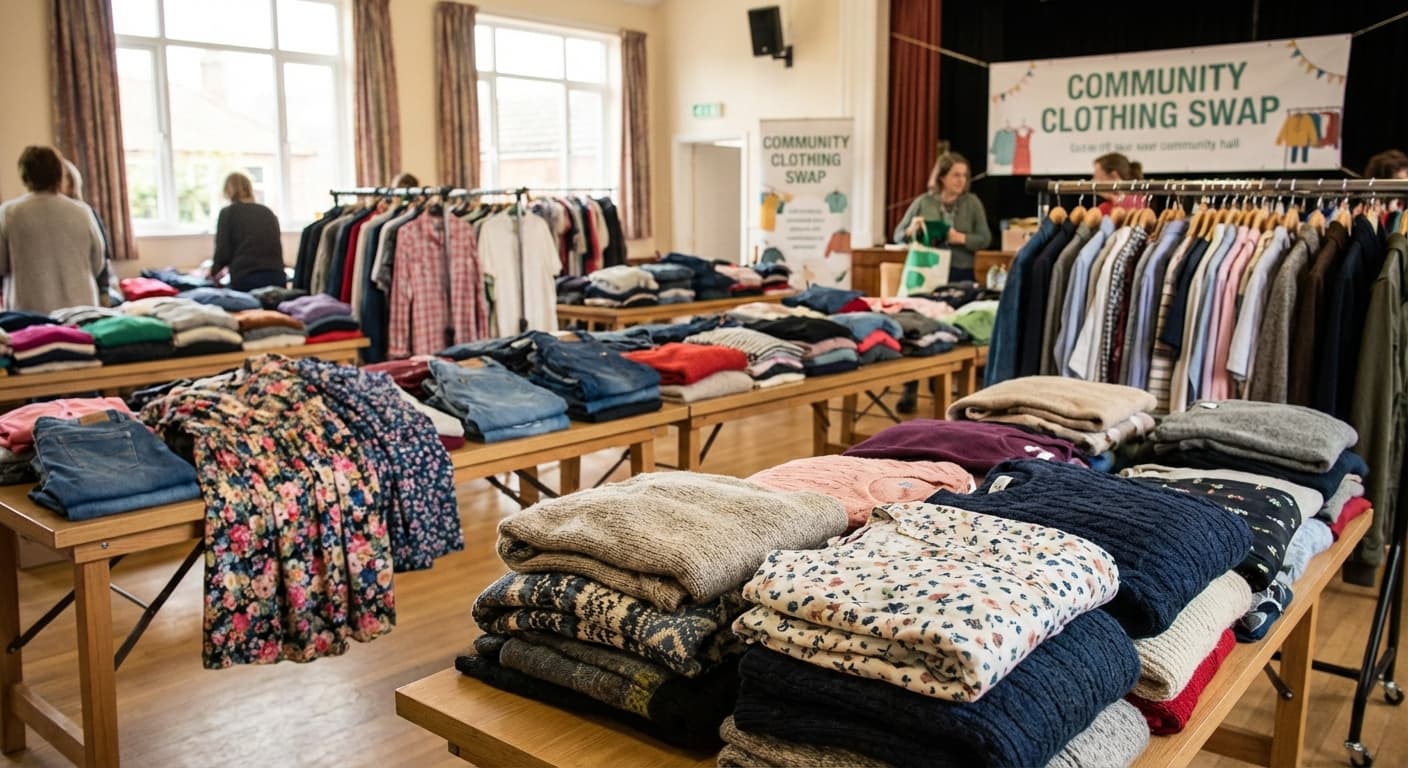
A general swap meet handles everything from blenders to board games. A clothing swap is narrower, and that focus is what makes it work. Fewer categories means faster browsing, easier setup, and a room full of people who showed up for the same reason: new-to-them clothes without a price tag.
Why Clothing Swaps Work Differently
At a regular swap meet, each seller runs their own table. Pricing and negotiation happen one-on-one. A clothing swap usually works differently: everyone contributes items to a shared pool, and everyone picks from that pool.
The most common format:
- Each person brings a set number of clean, wearable items (10-15 is a good range)
- Items get sorted by category and size on communal racks and tables
- Everyone browses and takes what they want
Some events use a token system: bring 10 items, get 10 tokens, spend them however you like. Others are free-for-all after a set "shopping" start time. Both work. Tokens feel fairer. Free-for-all feels more exciting.
The key difference: nobody's selling. This changes the energy completely. People aren't protective of their stuff. There's no haggling. The vibe is closer to shopping a friend's closet than working a flea market.
Setting Up the Space
Clothing needs more display space than most swap items. A pile of clothes on a table is invisible. You need vertical space.
Racks are essential. Borrow portable garment racks, set up clotheslines, or lean a ladder against a wall and drape hangers on it. For a 15-person swap, plan on at least 3-4 racks or equivalent hanging space. No racks? Two chairs with a broomstick across the backs work in a pinch.
Sort by category, not by contributor. Dresses together. Tops together. Pants together. Jackets together. Within each category, sort by size if you can. This turns a chaotic pile into something browsable.
Create a try-on area. This is what most first-time organizers forget. People need to try things on. A bathroom works. A corner with a curtain works. A full-length mirror is worth borrowing or buying for $5 at a thrift store. Without a try-on spot, people grab conservatively. With one, they experiment.
Designate a shoe and accessories section. Shoes on the floor under a table, arranged by size. Bags, scarves, belts, and jewelry on a separate surface. These get overlooked when mixed in with the racks.
The Rules That Matter
Keep the rules short. Three or four that count:
Condition standards. "Bring items you'd be happy to receive." No stains, no holes, no pilling, no stretched-out elastic. Be specific. "Gently used" is too vague. "Clean, no damage, and something you'd wear to brunch" sets a clear bar.
Item limit. 10-15 items per person is the sweet spot. Fewer than 10 doesn't generate enough selection. More than 15 overwhelms the space and means lower average quality, because people start padding their count with stuff from the back of the closet they should have skipped.
Seasonal focus. Suggest that people bring seasonally appropriate items. A winter coat swap in June fills your racks with things nobody wants for six months.
Pickup order. If you're using tokens, this is handled. For free-for-all formats, decide how to manage the initial rush. Random number drawing works. So does "everyone who contributed gets 10 minutes before we open it up." Just decide before the event starts and announce it clearly.
Managing the Leftovers
This is where clothing swaps get tricky. At a sell-your-own event, each person takes home their unsold items. At a clothing swap with a communal pool, the leftover pile belongs to no one and everyone.
Plan this before the event and announce it in advance:
- Charity pickup. Schedule one for the same day. Many local organizations will pick up bagged clothing if you call a week ahead.
- Textile recycling. For items not in donatable condition, find your nearest textile recycling drop-off. Most cities have one. (Worth knowing: a lot of donated clothing doesn't get worn again, so recycling is sometimes the more honest choice.)
- A "take more" round. In the last 30 minutes, remove any item limits. Let people grab extras for friends, family, or their next swap contribution. This clears more than you'd expect.
What you don't want: bags of unclaimed clothes in your living room for three weeks. Set the expectation upfront that nothing goes home with the organizer.
Making It Social
The best clothing swaps don't feel like errands. They feel like events.
Music helps. A Bluetooth speaker and a playlist. It sounds small but it shifts the energy from "thrift store" to "party."
Food is optional but effective. Coffee and a box of pastries. Nothing elaborate. Food gives people a reason to linger, chat, and browse a second time.
Invite across friend groups. The magic of a clothing swap is finding things you never would have picked for yourself. That happens when the contributors have different styles. If everyone in the room dresses the same way, the selection is predictable. Mix your yoga friends with your work friends with your book club.
Take photos. People in their new finds, the racks before and after, the group shot. Post them in the group chat afterward. Photos do more to fill your next swap than any invitation.
Scaling Up
Your first clothing swap should be small. 8-12 people in a living room. Once you've run it twice and the format feels solid, you can grow.
20-30 people needs a bigger space. A community room, a church hall, a garage in decent weather. At this size, recruit a helper or two for intake and sorting.
Beyond 30, consider charging a small entry fee ($5-10) to cover the venue and donate the proceeds. At that point you're running a community event, not hosting friends. That's a good thing. Some of the best recurring swaps in any city started as ten people in an apartment.