How to Find a Free (or Cheap) Venue for Your Swap Meet
Your driveway works for the first few events. When you outgrow it, here's where to look and how to ask.
Your first swap meet probably happened in a driveway or a backyard. That works for 5-10 sellers. But once you hit 15-20 participants, you need more space, and "more space" doesn't have to mean "more money."
Most swap meet venues cost nothing. The ones that charge are cheaper than you'd expect. You just have to know where to look and what to say when you ask.
Free Venues That Work
Church parking lots. Most churches have large paved areas that sit empty six days a week. Many are happy to lend the space for a community event, especially if you mention it's a neighborhood activity. Call the church office, explain what you're doing, and ask about Saturday availability. Some will want a small donation. Most will say yes for free. Bonus: churches almost always have bathrooms and often have a fellowship hall as a rain backup.
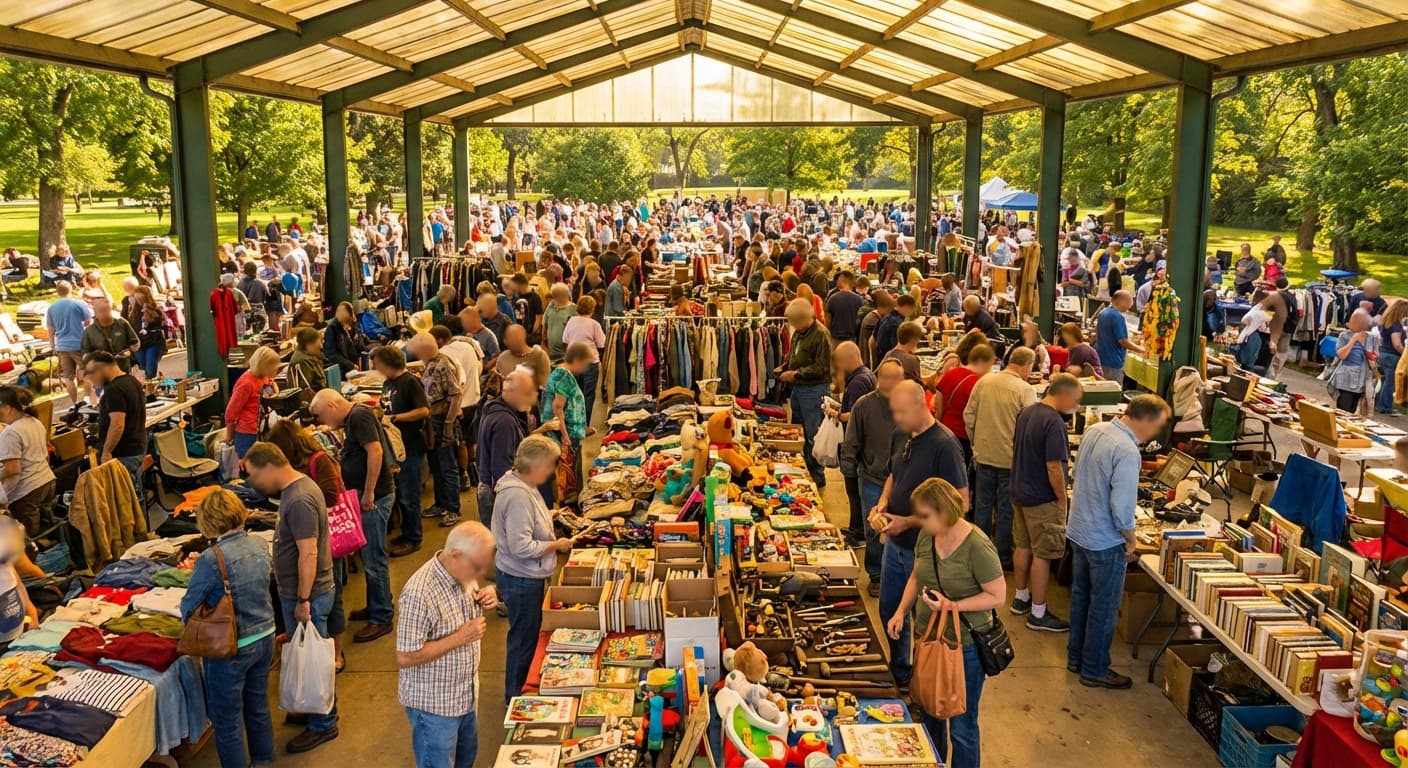
Park pavilions and shelters. Public parks with covered pavilions are ideal for swap meets. They provide shade, rain protection, and a built-in gathering spot. Many cities let you reserve pavilions for free or for a nominal fee ($25-50). Check your city's parks department website. Book at least a month ahead because weekend pavilions fill up, especially in spring and fall.
School parking lots or gyms. Schools need community goodwill. A swap meet on a Saturday morning in the school parking lot costs nothing, draws local families, and gives the PTA something to promote. Contact the administration or PTA directly. Gyms work for bad-weather backup but add complexity since you'll need to protect the floor.
Neighborhood common areas. HOA clubhouses, apartment complex courtyards, condo common rooms. If you live in a planned community, you probably have access to shared space that's underused on weekends. Check with your HOA or property manager. These spaces are often free for residents.
Business parking lots. Strip malls, auto shops, and retail stores with excess parking will sometimes let you use their lot on a weekend morning. The business gets foot traffic. You get a paved, accessible venue. Ask the manager in person. Bring a one-page summary: how many people, what time, how you'll handle trash.
Cheap Venues Worth Paying For
Sometimes spending $50-100 gets you a noticeably better experience.
Community centers. Most have multipurpose rooms that rent for $50-100 for a half day. You get walls, climate control, bathrooms, tables (often included), and a parking lot. The rent is easy to cover if you charge sellers a $5-10 table fee. Twenty sellers at $5 each covers a $100 room and leaves budget for signs and supplies.
Fire stations. Volunteer fire departments often rent their bays and parking areas for community events at low cost. The space is large, covered, and comes with a built-in neighborhood connection. Plus, people like going to fire stations.
VFW and Elks lodges. Fraternal organizations have event halls that rent for less than commercial spaces. $50-75 for a Saturday morning is common. Some waive the fee entirely for community events if a member sponsors you.
What to Look For in a Venue
Not all spaces work equally well. Prioritize these:
Parking close to the setup area. Sellers arrive with carloads of stuff. If they have to carry bins 200 yards from their car to their table, participation drops. The best venues let people pull up, unload, and park nearby.
Flat, paved ground. Grass works in dry weather but turns into a problem after rain. Gravel is annoying for table legs and strollers. Pavement is the standard. If you're using a park, look for paved areas near the pavilion.
Shade or cover. Direct sun for four hours wears everyone out. Trees, awnings, pavilion roofs, or canopies make a major difference. If there's no natural shade, tell sellers to bring their own pop-up canopy.
Bathroom access. Non-negotiable for events longer than two hours. Port-a-potties cost money. Nearby public restrooms work. Venues with their own bathrooms are best.
Visibility from a road. A swap meet tucked behind a building gets no walk-up traffic. One visible from a busy street gets curious passersby who become buyers. This is a bonus, not a requirement, but it can meaningfully grow your crowd.
How to Ask
Most venue gatekeepers hear "event" and think "liability headache." Reframe your ask.
Lead with community. "We're organizing a neighborhood swap meet where families trade and sell items they no longer need. It's small, family-friendly, and we clean up after ourselves." That sentence covers every concern.
Bring specifics:
- How many people (be honest)
- What hours (emphasize the short window: 3-4 hours)
- How you'll handle setup and cleanup
- Whether you have insurance (you probably don't, and most casual venues won't require it for a small event)
Ask about restrictions. Some venues don't allow food sales. Some require you to stay off the grass. Some want you gone by a specific time. Know the rules before the event, not during it.
Follow up with a thank-you and an invitation for the venue contact to stop by. People who see a well-run swap meet in their space are more likely to say yes next time.
When to Move Beyond the Driveway
The signal is simple: if your last event had people waiting for a spot, you've outgrown the space. Don't squeeze more sellers into a cramped area. Tight layouts kill the browsing experience.
A venue upgrade also signals growth. The event feels more established. New people take it more seriously. The extra space lets you add a kids' area, a free table, or wider aisles between sellers. If you're building a recurring event, upgrading the venue is often the step that takes it from neighborhood hangout to community institution.
The best swap meet venues are the ones your participants can find easily, park at conveniently, and browse comfortably. Everything else is secondary.